

The aircraft is the easy part
People ask us about the drone — which model, how long it flies, how high it goes. Honestly, the airframe is the least interesting decision we make. What matters is the payload bolted underneath it and the ground control we lay out before it ever leaves the case. A survey drone is just a flexible tripod that moves: the question is always what sensor it carries and how we tie its data to the national grid.
On our jobs the choice comes down to two families. A photogrammetry payload is a calibrated camera that we stitch into an orthomosaic and a surface model. A LiDAR payload fires laser pulses and measures their return, building a point cloud that can see the bare earth through gaps in vegetation. They solve different problems, and reaching for the wrong one wastes a flight day.
Mapping camera vs LiDAR payload
| Criterion | Photogrammetry (camera) | LiDAR payload |
|---|---|---|
| Primary deliverable | Orthomosaic + surface model | Ground point cloud + DTM |
| Sees bare ground under vegetation | No — maps the canopy top | Yes — pulses find gaps |
| Colour / visual context | Full true-colour | Intensity only (unless paired with camera) |
| Payload weight & cost | Lighter, cheaper | Heavier, costlier |
| Works in poor light | No | Yes — active sensor |
| Best for | Bare/open sites, stockpiles, as-built | Vegetation, corridors, drainage, forest |
Neither wins outright — the highlighted column is the better fit for that row.
Altitude is a dial, not a setting
The single biggest tradeoff in the field is altitude, and it is genuinely a dial we turn per job. Fly higher and each photo covers more ground, so you finish a large site on fewer batteries — but every pixel now represents more centimetres on the earth, which is the ground sample distance, and your achievable accuracy loosens with it. Fly lower and the detail tightens, but coverage per battery collapses and a big corridor turns into a long day of swaps.
So we do not pick an altitude in the abstract. We start from the deliverable — a 1:1000 site plan, a contour set, a volume report — work back to the ground sample distance it needs, and only then fix the flight height. A highway corridor and a small farmland block can need very different altitudes for the same accuracy class.
Altitude trades coverage against detail
How we run a drone survey, start to deliverable
- 1
Plan the mission from the deliverable: fix the accuracy class, ground sample distance, overlap and flight altitude before we leave the office.
- 2
Establish ground control: set RTK-coordinated targets across the site and reserve independent checkpoints we will not feed into processing.
- 3
Fly the mission: capture the photogrammetry or LiDAR run at the planned altitude and overlap, watching battery and coverage in the field.
- 4
Process the data: aerotriangulate or register the cloud, generate the orthomosaic, DSM/DTM and point cloud on the project's datum.
- 5
Verify accuracy: compare the model against the held-back checkpoints and report the residuals against a positional-accuracy standard.
- 6
Deliver: hand over orthomosaic, point cloud, DTM/DSM, contours and any volumes, with the accuracy report attached.
We report accuracy, not just resolution
A drone spec sheet sells you pixels; a survey sells you trusted coordinates. Per a positional-accuracy standard (ASPRS), we hold back independent checkpoints, never let them touch the processing, and quote the model's horizontal and vertical accuracy from the residuals. 'Centimetre pixels' is not an accuracy claim — the checkpoint report is.
Which payload we pick, by site
| Site type | Payload we reach for | Why |
|---|---|---|
| Open highway corridor (bare) | Photogrammetry | Surface is fully visible; true-colour ortho aids design and as-built. |
| Farmland / vegetated ground | LiDAR | Pulses find the soil through the crop; camera would map the canopy. |
| Power-line corridor | LiDAR | Captures conductors, towers and bare ground in one ground-true cloud. |
| Stockpile / quarry volumes | Photogrammetry | Bare material, fast capture, reliable surface model for volumes. |
| Construction site progress | Photogrammetry | Visual context plus surface model for cut/fill and as-built checks. |
How our crews map a site type to a payload. Choices are field judgement, not fixed rules. · General practice; payload availability and accuracy targets vary by project.
From a flown site to a measurable map
 Contour deliverable
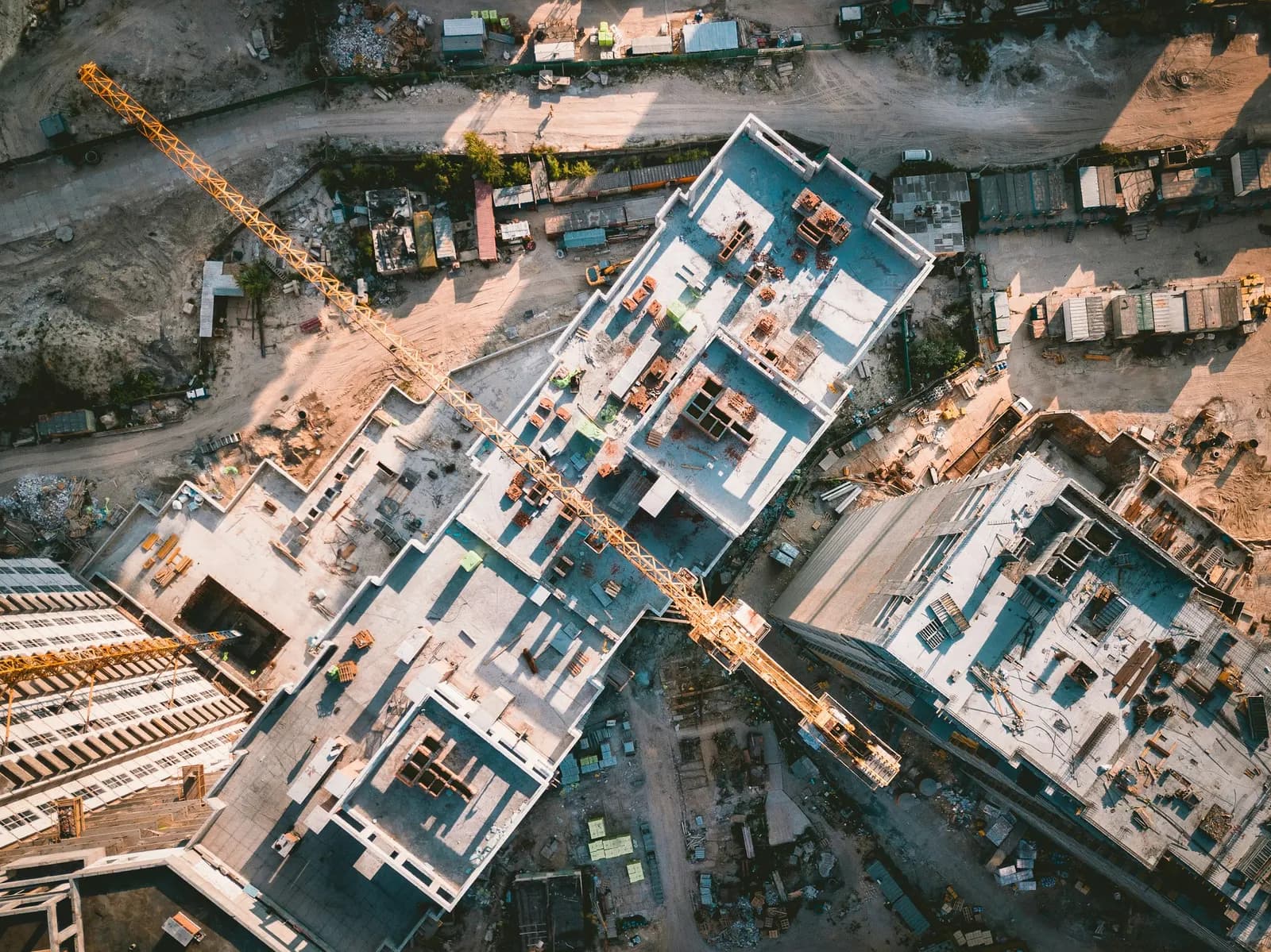 Flown site
Drag to compare: raw aerial capture becomes a coordinate-true, contoured deliverable.
Flying a live corridor
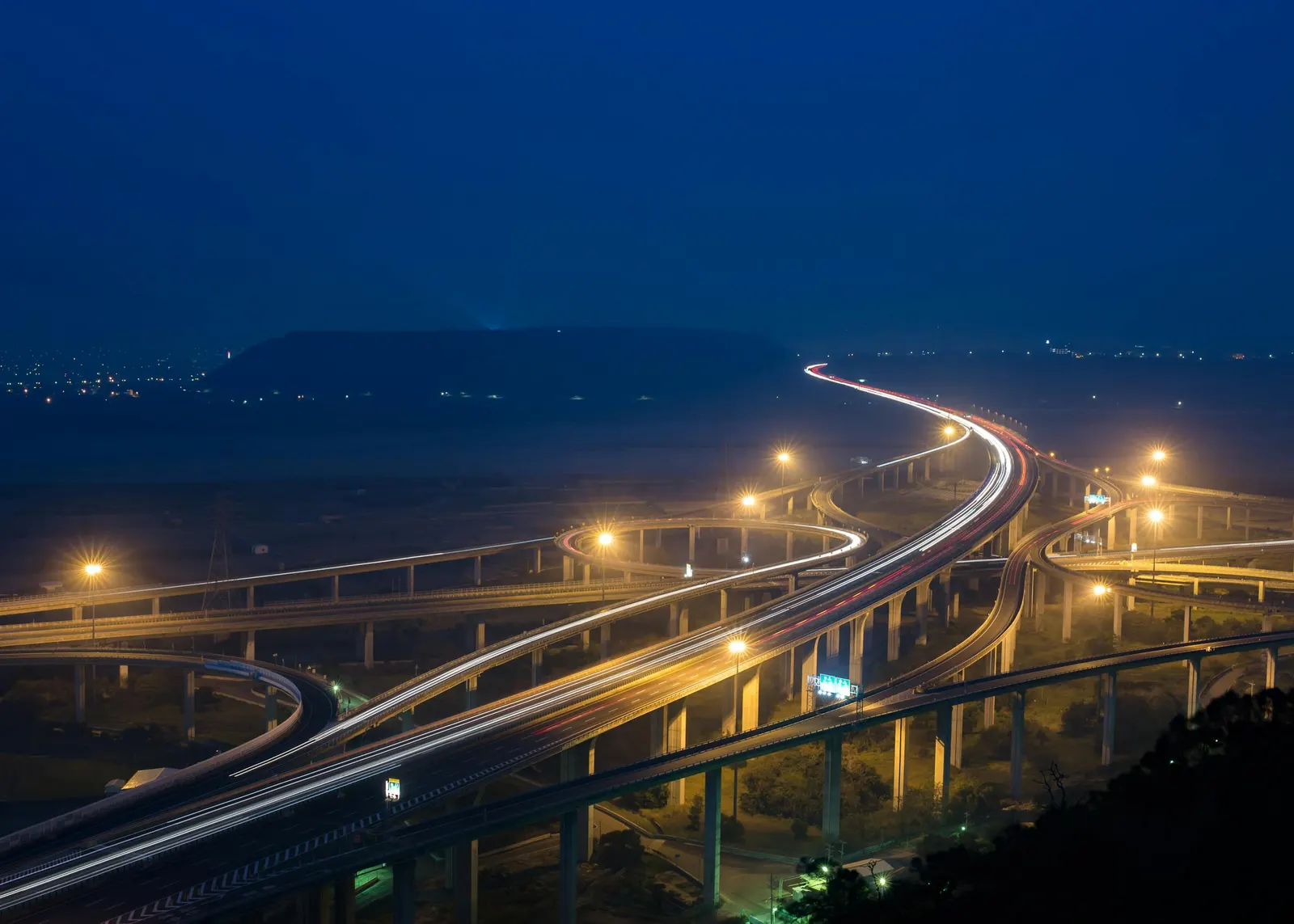
The aircraft behind the work

Survey drones
UAV photogrammetry and LiDAR for orthomosaics, topographic mapping, and asset inspection.
such as DJI Matrice 300 RTK, Phantom 4
Representative drone platforms from the GeoGiza fleet. Photographs are illustrative of the instrument class.
Go deeper
References
- Survey drone specifications (DJI Matrice / Phantom) — DJI Enterprise
- Positional Accuracy Standards for Digital Geospatial Data (2nd ed.) — American Society for Photogrammetry & Remote Sensing (ASPRS)