

A volume is a gap, not a measurement
The first thing to understand about earthworks quantities is that you never measure a volume. You measure two surfaces — the ground as it is, and the ground as it should be (or was) — and the volume is the space trapped between them. Cut is where the existing surface sits above the design; fill is where it sits below. Everything that follows, every argument over a payment certificate, comes down to whether those two surfaces are honest and whether they share the same frame.
On our road projects we learned this the hard way long before software made it look easy. A volume from a clean model can be confidently, precisely wrong if the base surface is the wrong base surface, or if the two surfaces are quietly half a metre apart in datum. The number always comes out — the discipline is making sure it means something.
The ground behind the method
- 800,000+
- feddans levelled
- land-levelling and earthworks volume work
- 3,000+ km
- roads surveyed
- where cut/fill take-off is daily work
- 90
- instruments in the fleet
- GNSS, total stations, drones, levels
Two ways to build the surface
The volume is only as good as the surface, and there are two honest ways to capture one in the field. The first is ground survey — GNSS-RTK rovers and the total station walking a grid or breakline pattern across the site, each shot a real, controlled point. The second is drone photogrammetry — a flight that builds a dense surface from overlapping images, anchored on surveyed ground control.
They are not rivals; they are tools for different ground. The drone is unbeatable for open, bare, dangerous, or fast-changing surfaces — a stockpile yard, a borrow pit, a graded platform — where it hands you tens of thousands of points in an afternoon. Ground survey wins exactly where photogrammetry struggles: under tree canopy, on water, in deep narrow cuts the camera can't see into, and anywhere the ground is hidden. On most real earthworks jobs we use both, and we let each check the other.
Drone vs ground for the surface capture
| Criterion | Drone (photogrammetry) | Ground (GNSS / total station) |
|---|---|---|
| Points captured per day | Tens of thousands | Hundreds to a few thousand |
| Open bare ground / stockpiles | Excellent | Slow but exact |
| Vegetation, water, overhangs | Degrades — sees the canopy | Captures the true ground |
| Deep narrow cuts / under structures | Blind spots | Reaches what it can stand on |
| Needs ground control to be metric | Yes — surveyed GCPs | Yes — known control |
| Best role | Bulk surface, fast & dense | Anchor, check & hidden ground |
The highlighted column is the better fit for that row — on a real site we run them together, not against each other.
How we take off an earthworks volume
- 1
Tie to control first: establish or recover known control on the national grid with GNSS, and lay surveyed ground control points across the area before any flight or grid walk.
- 2
Capture the existing surface: fly the drone for dense bare-ground cover, and fill the shadows — vegetation, water edges, deep cuts — with GNSS-RTK and total-station shots so no ground is guessed.
- 3
Build and clean the surface: process the photogrammetry against the GCPs, merge the ground shots, and strip vegetation, vehicles, and spoil that are not the surface you are measuring.
- 4
Define the second surface: load the design model, the original-ground survey, or a previous epoch — whichever the volume is measured against — confirming it shares the same datum and grid.
- 5
Compute cut and fill surface-to-surface: difference the two surfaces, report cut and fill as separate quantities, and carry the net only as a balance check.
- 6
Check and document: re-shoot an independent check section, reconcile against haul records where they exist, and record the two surfaces, datum, control and method so the volume is re-traceable.
Typical positional accuracy by capture method
Anchor the surface to control, every time
A photogrammetric surface is only metric once it sits on surveyed ground control, and RTK shots are only trustworthy when the base and check procedure are sound. Per NGS RTK guidance we initialise on known control, occupy a check point of independent geometry, and re-observe rather than trust a single fix. Per the ASPRS positional-accuracy standard we state the surface's accuracy in the deliverable instead of implying a precision the data can't carry. A volume inherits the weakest surface under it — so we control both.
Where earthworks volumes quietly go wrong
| Trap | What it does to the number | How we avoid it |
|---|---|---|
| Wrong base surface | Cut/fill computed against the wrong 'before' — pure fiction | Survey existing ground BEFORE earthworks start; name the base surface in the report |
| Datum / grid mismatch | Two surfaces offset by a constant — a uniform false cut or fill | Confirm both surfaces share one datum, grid and projection before differencing |
| Hidden ground | Photogrammetry measures grass/water/spoil, not the soil | Ground GNSS / total-station shots in vegetation, water and deep cuts |
| Netting cut and fill | Two pay items collapsed into one — usually under-bills | Report cut and fill separately; net is a check only |
| No check section | Nobody can re-trace or defend the volume in a dispute | Re-shoot an independent section and tie everything to known control |
The dominant earthworks errors are surface and bookkeeping errors, not instrument noise. · Field practice from our road and land-levelling work; accuracy expectations per ASPRS and NGS RTK guidance.
Capturing the working surface
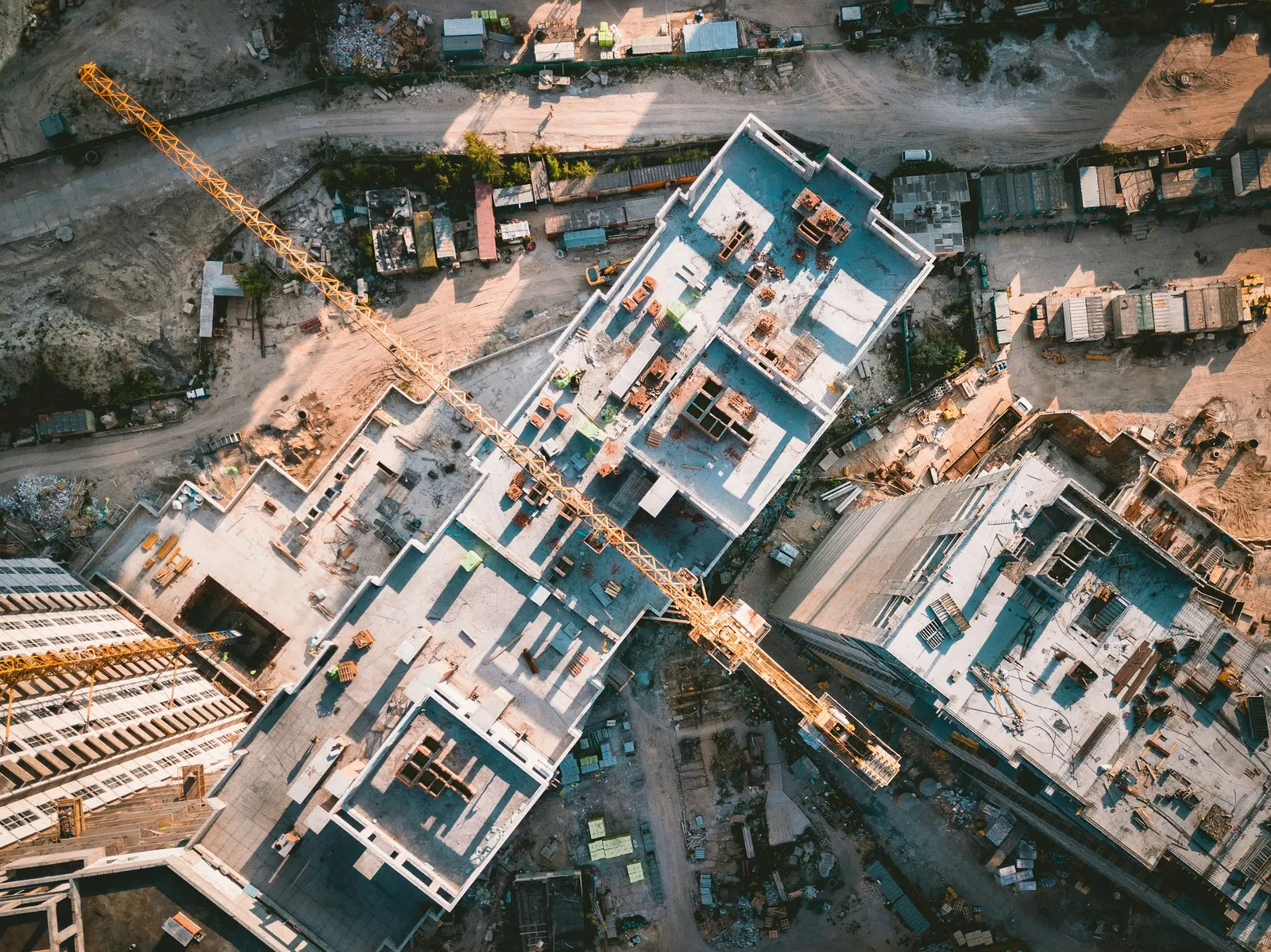
The instruments behind the volume
 From our field work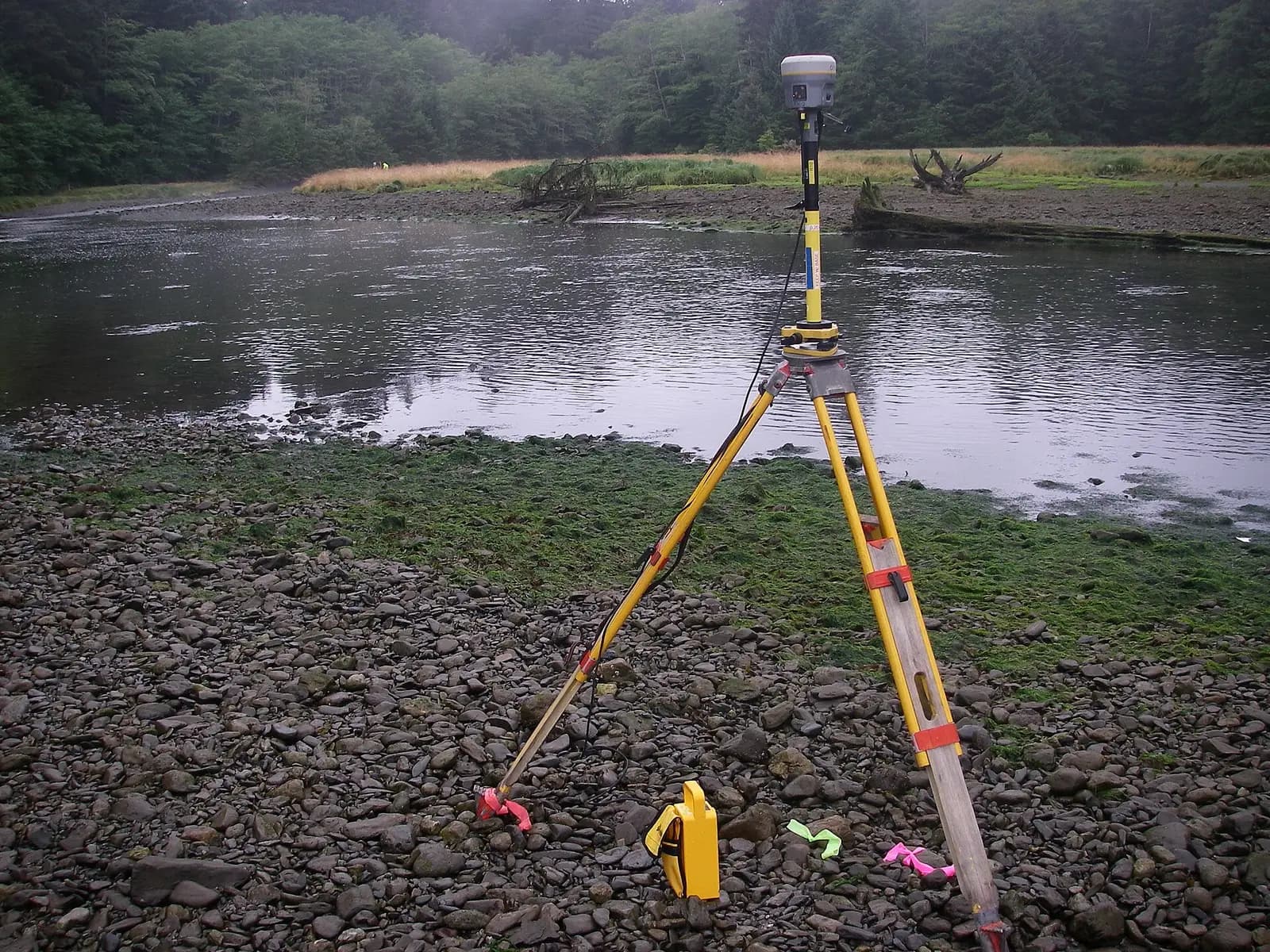
GPS / GNSS / RTK receivers
Survey-grade GPS receivers for centimeter-accurate satellite positioning (RTK) — control, topographic, and cadastral work.
such as Trimble R10/R8, Topcon Hiper V, Leica GS18

Survey drones
UAV photogrammetry and LiDAR for orthomosaics, topographic mapping, and asset inspection.
such as DJI Matrice 300 RTK, Phantom 4
Representative classes from the GeoGiza fleet used for earthworks surface capture. Photographs are illustrative of each instrument class.
Take it further
References
- Guidelines for Real-Time Kinematic (RTK) GNSS surveying and geodetic control — US National Geodetic Survey (NGS/NOAA)
- Positional Accuracy Standards for Digital Geospatial Data (2nd ed.) — American Society for Photogrammetry & Remote Sensing (ASPRS)